
Beginner / Chapters 1–9
Understand the machine and follow a request.
Tensors, GPU execution, memory, servers and TPUs. Then see how model architecture, prefill, attention and KV state turn an input into an answer.
September 2026 / Illustrated learning edition
A Beginner-to-Advanced Field Guide
Start with the bytes on one GPU. Follow a model through inference. Build up to the networks, training systems and operational decisions that make it work at scale.
The complete PDF and new editions are included while your Premium membership is active. Keep the copies you download.
Already a member? Sign in to download your copy →
Read three pages before you decide
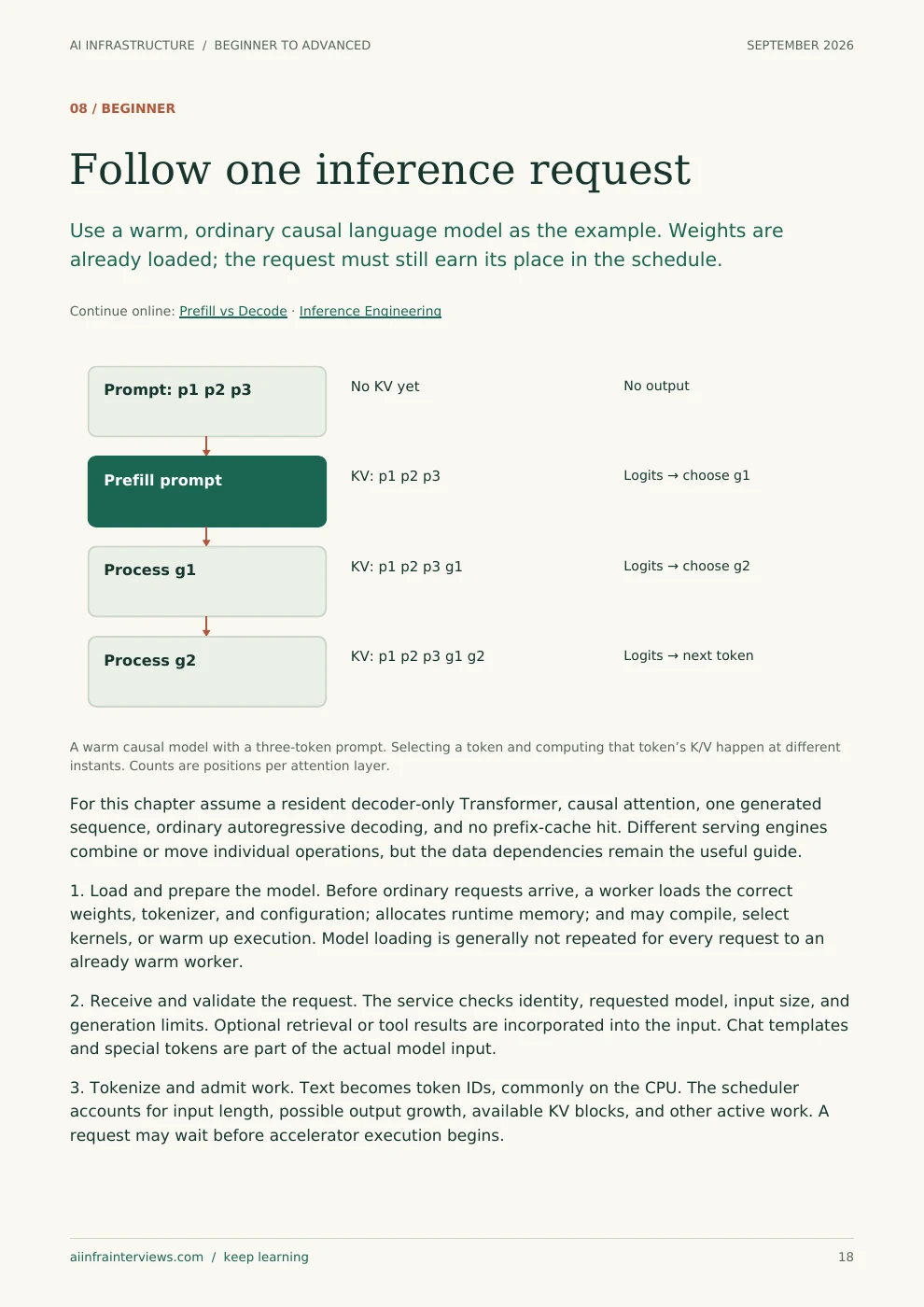
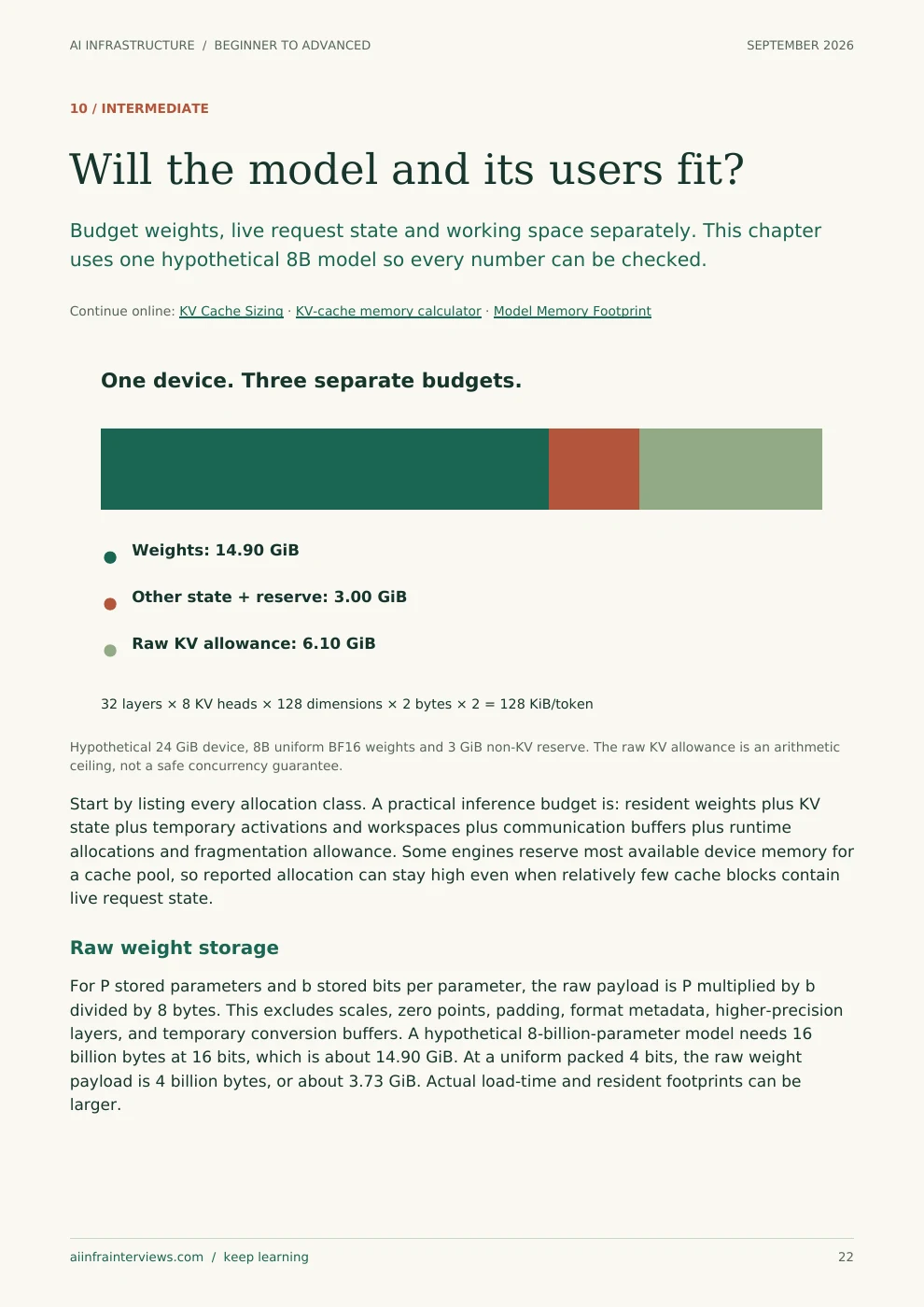
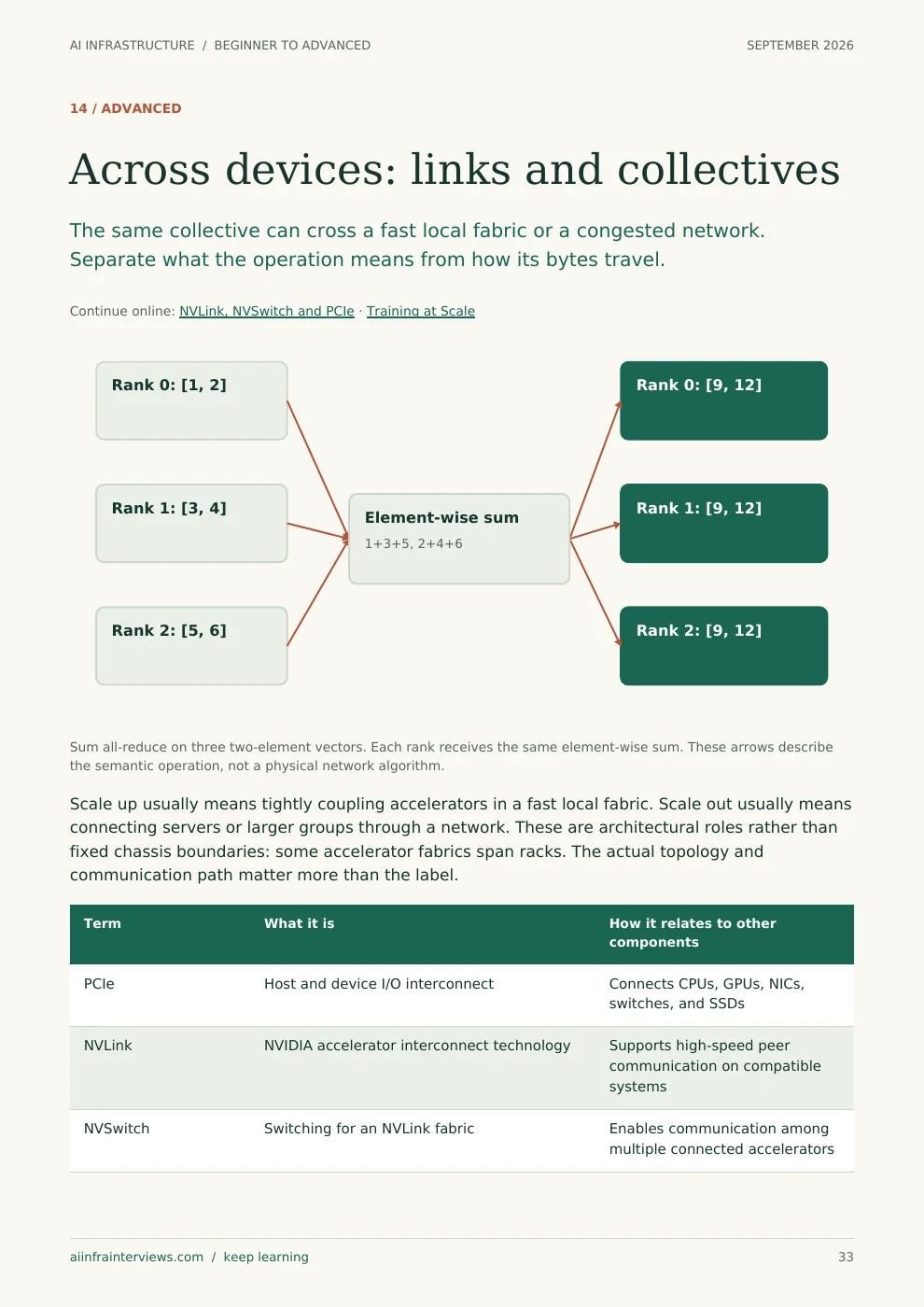
These are pages from the PDF. Open an image to read it at full size: the request journey, a worked memory budget, and what a collective gives each GPU.
One volume, several ways through it
Beginner / Chapters 1–9
Tensors, GPU execution, memory, servers and TPUs. Then see how model architecture, prefill, attention and KV state turn an input into an answer.
Intermediate / Chapters 10–13
Work through model and KV memory, precision, the roofline and latency. Learn which work batching, paging, prefix reuse and speculation actually save.
Advanced / Chapters 14–18
Collectives, parallelism, training state, software compatibility, admission, scaling, recovery, storage, power and cooling, with the assumptions made explicit.
Practice and reference / Chapters 19–23
Diagnostic tables, five deployment calculations, practical exercises, self-checks with answer anchors and a glossary organized by topic.
The guide uses a hypothetical 8B model with 32 attention layers, 8 key/value heads, a head dimension of 128 and two-byte KV values. Each retained token uses 128 KiB across the layers. One 8,192-token sequence therefore needs 1 GiB of raw KV state.
That is only the request state. Add weights and working space before deciding how many sequences fit. The report then changes one assumption at a time, including prefix sharing and cache precision, and explains why a memory fit does not establish latency. Read the maintainer’s explanation of attention caching.
Explore the KV-cache calculator → · Learn model size and precision →
Clickable contents and chapter references help you move around the report. Worked examples state their assumptions. Topic links lead to our concepts, courses, calculators and live model and hardware references, so the PDF can be the beginning of a longer learning path.
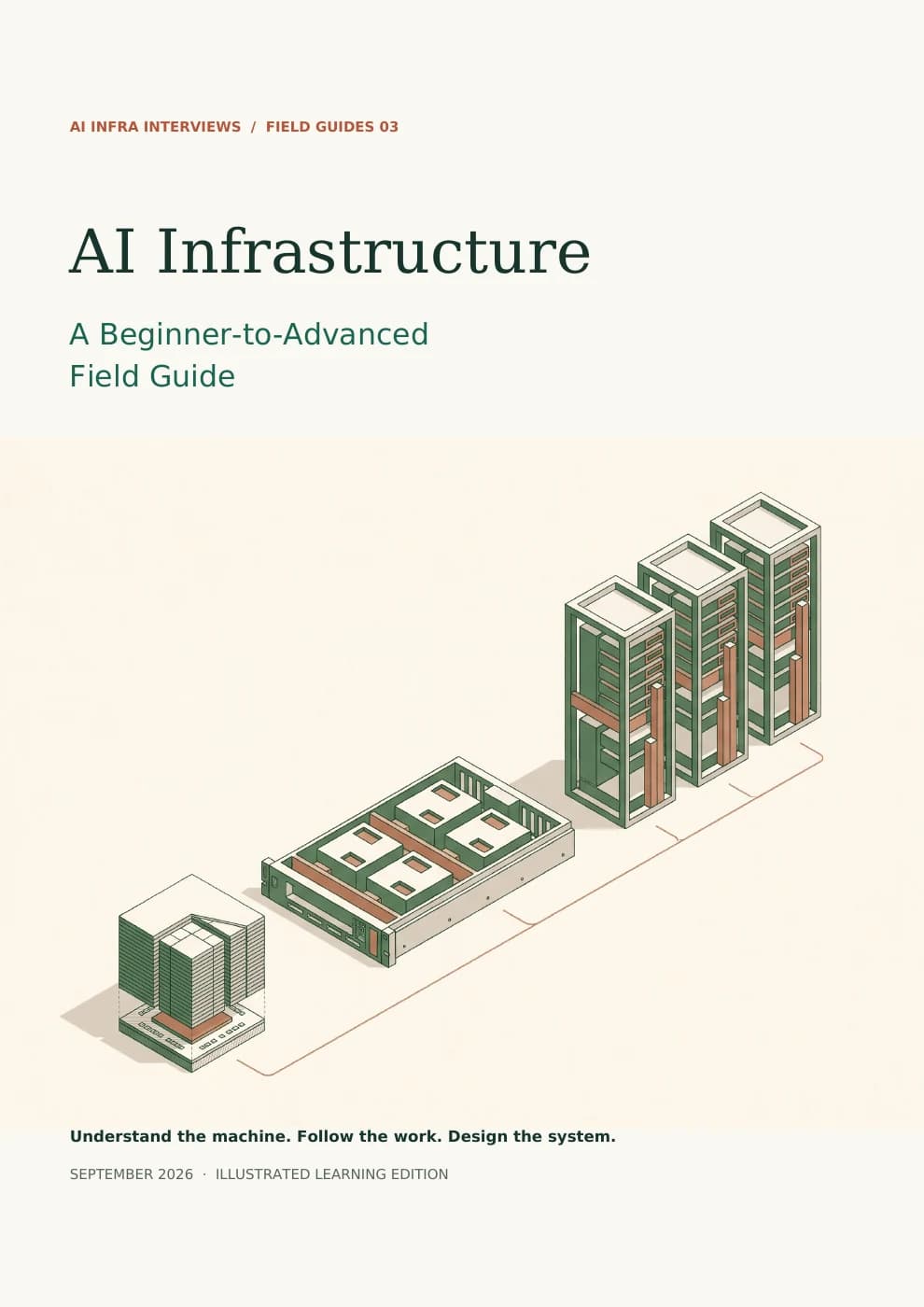
Reviewed 2026-09-13. References are original papers and vendor or maintainer documentation. Calculations and diagrams are teaching examples; no independent GPU benchmark was run. The Nano Banana cover is conceptual artwork, separate from the technical diagrams.
AI Accelerator Field Guide compares hardware and is free to download with an account. The Open Model Field Guide covers releases, architectures and deployment paths; its PDF is also included with Premium.